


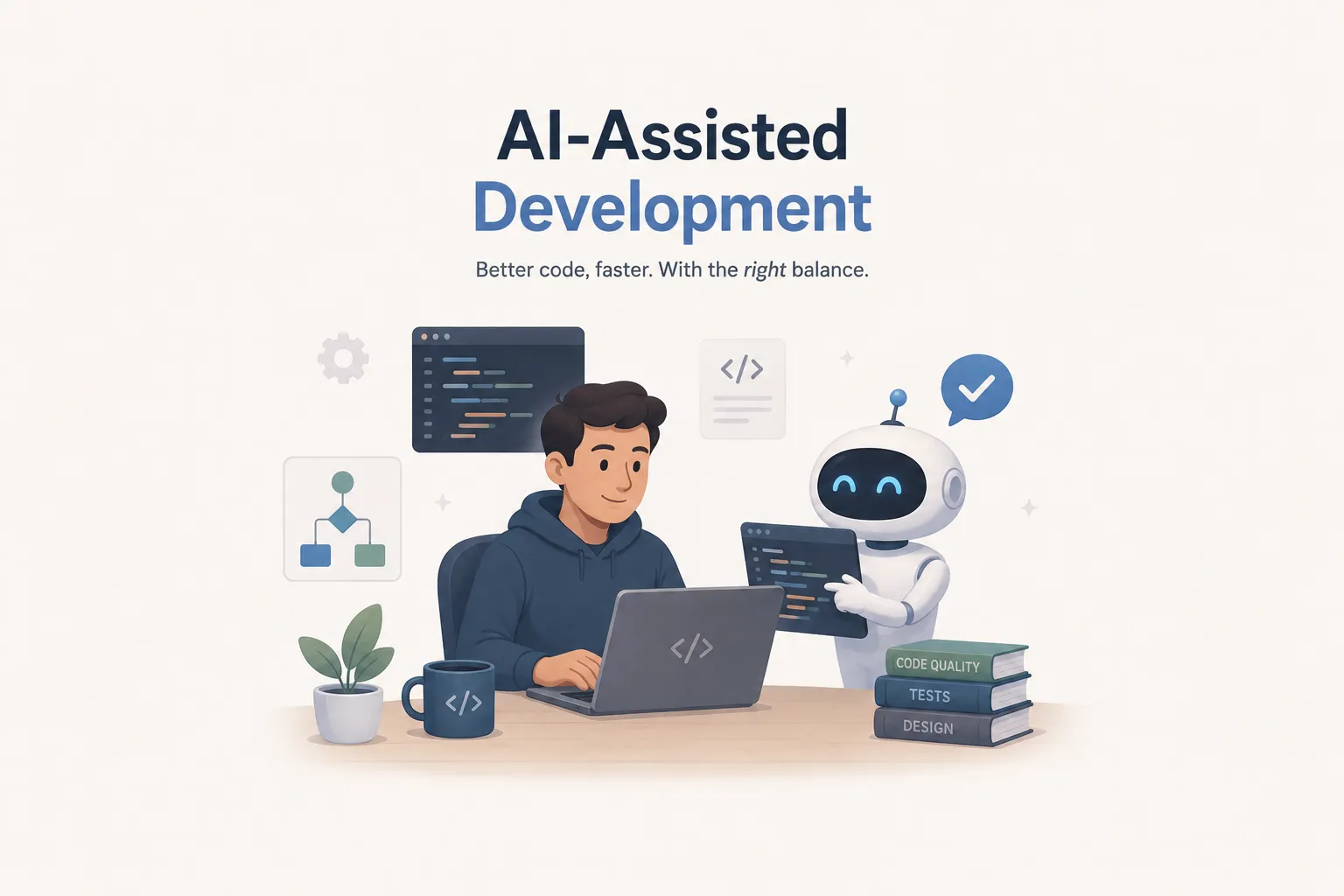
This website you're reading was built almost entirely with AI assistance. Not generated blindly, not copy-pasted from ChatGPT, but developed through a genuine collaboration between a senior engineer and an AI coding partner. I want to share what that experience was actually like — the workflow, the surprises, and the honest trade-offs.
I used Figma for the design system and visual direction, and Claude (Anthropic's AI) as my primary coding partner through Claude Code. The entire stack — Next.js 14, Tailwind CSS, four-language i18n, SEO optimization, Vercel deployment — was built in a conversational workflow where I directed architecture and content decisions while the AI handled implementation at speed.
The Workflow: Directing, Not Dictating
Here's what most people get wrong about AI-assisted development: they either expect the AI to do everything autonomously, or they treat it as a glorified autocomplete. The reality is more nuanced. I work with Claude the same way I'd work with a very fast, very knowledgeable junior developer — one who never gets tired, never forgets context, and can switch between TypeScript, CSS, SEO, and i18n without blinking.
My process: I design the visual direction in Figma, define the component architecture, and make the strategic decisions. Then I describe what I want to Claude in natural language — "build the about page with a hero section, photo grid, and values cards using our existing design tokens" — and iterate on the output. The AI writes the code. I review it, adjust, and push to production.
This isn't abdication. It's leverage. I still make every architectural decision, every UX choice, every content call. But instead of spending 45 minutes wiring up a responsive grid with proper image optimization, I spend 2 minutes describing what I want and 3 minutes reviewing the result.
Figma as the Source of Truth
Figma remains essential in this workflow. AI can write excellent code, but it can't replace visual thinking. I use Figma to explore layouts, establish spacing rhythms, test color combinations, and define the emotional tone of each page. The design system lives there — typography scale, color tokens, component patterns.
What changes is how quickly I can go from a Figma frame to production. There's no tedious manual translation of pixels to CSS. I describe the design intent, reference the tokens, and the AI produces code that matches. When it doesn't match perfectly, I adjust — but the feedback loop is minutes, not hours.
This combination — human visual judgment in Figma plus AI implementation speed — creates a workflow that's genuinely better than either alone. I design more ambitiously because the implementation cost is lower. And the AI produces better code because it has clear design direction to follow.
What AI Does Well
Repetitive multi-language content: I write the English version, then the AI produces German, French, and Italian translations that are natural and contextually appropriate — not machine-translation stiff, but genuinely readable.
Boilerplate with precision: SEO metadata, Open Graph tags, sitemaps, canonical URLs, hreflang alternates — all the things that are critical to get right but tedious to write by hand. The AI handles them consistently across dozens of pages without the copy-paste errors a human would make.
Performance optimization: When my Lighthouse scores showed a blocking time issue, I described the problem and the AI identified the root cause (eager-loading canvas animations), proposed the fix (lazy loading via next/dynamic), and implemented it across every affected component in one pass.
Cross-cutting refactors: Renaming a concept, changing an API surface, updating imports across files — the kind of work that's mechanical but error-prone for humans. The AI does it perfectly because it doesn't lose attention.
What AI Doesn't Do
It doesn't make product decisions. When I built the blog system, the AI didn't decide which posts to publish, what tone they should have, or whether claims were accurate. I caught content that was too specific, numbers that were wrong, and framing that didn't represent my actual experience. The human judgment layer is non-negotiable.
It doesn't replace taste. The visual design, the content strategy, the information architecture, the decision of what to build and what to skip — these are human calls. AI is a powerful implementation tool, but it optimizes for what you tell it, not for what your users actually need.
It doesn't understand your brand. I had to correct tone, soften claims, remove specifics that weren't accurate, and ensure the personality came through. The AI writes competent prose, but it writes generic competent prose unless you actively shape it.
The Engineering Mindset Still Matters
Here's the thing that surprises people: using AI effectively requires more engineering skill, not less. You need to understand architecture to direct it. You need to read code critically to review it. You need to know what good performance looks like to spot when it's missing.
I wouldn't trust this workflow with someone who couldn't build the site themselves. The AI amplifies capability — it doesn't create it. A senior engineer with AI moves at 5-10x speed. A junior with the same AI produces code that looks right but breaks in production, because they can't evaluate what they're getting.
This aligns with how I hire: I look for engineers who think critically about trade-offs, not fanboys of any particular tool. AI is just another tool — an incredibly powerful one, but still a tool. The engineers who thrive with it are the ones who already had strong judgment about when to use what.
What This Means for the Industry
I believe AI-assisted development is the new baseline. Not a gimmick, not a shortcut for lazy engineers, but a genuine capability multiplier for people who already know what they're doing. The developers who resist it will ship slower. The ones who lean in thoughtfully will build things that were previously too expensive to attempt.
This website — multilingual, performant, SEO-optimized, with a blog, contact form, and polished design — would have taken weeks of solo work. It took days. That's not because the AI did it for me. It's because the AI let me focus on the decisions that matter while handling the implementation at machine speed.
The future of software development isn't AI replacing engineers. It's engineers who know how to collaborate with AI building circles around those who don't.